
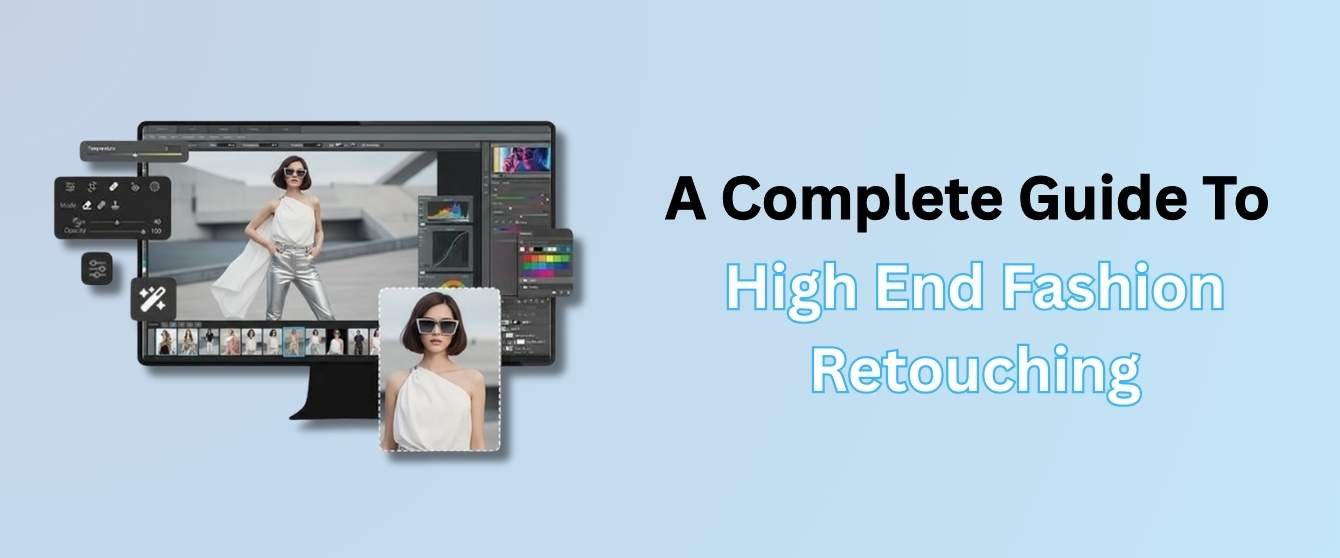
In the fast-paced world of fashion, perception bridges the gap between creative vision and the final image, making every detail of retouching essential to how luxury is seen and felt. People who look at Instagram or flip through a magazine are buying more than just clothes.
They are buying a way to live, a goal, and a feeling. This is when the quality of the post-production matters. High-end fashion retouching connects the original creative vision to the final image, refining a photograph until it fully represents the intended luxury and artistic quality
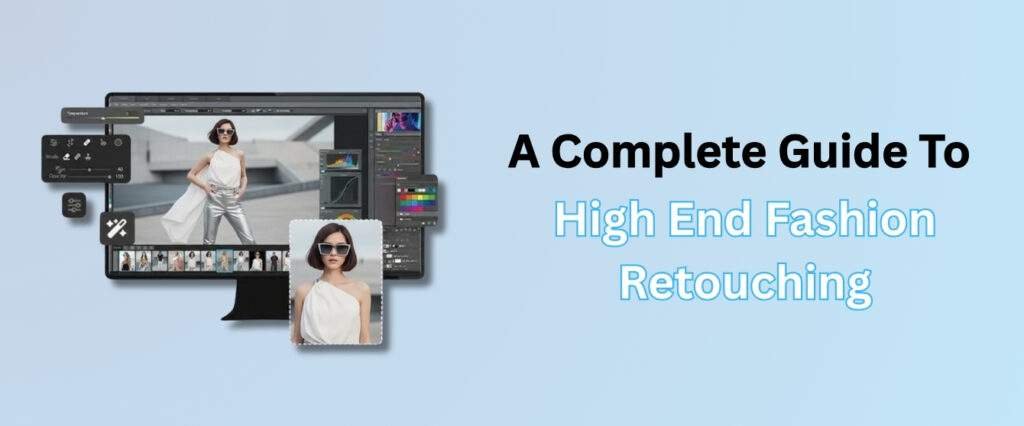
This guide explores how high-end fashion retouching enhances luxury garments in editorial photography, refining every detail to meet industry standards. If you want to build your portfolio as a photographer, work as a creative director in New York, or run a boutique in Los Angeles, you need to learn the small details of professional retouching.
High-end fashion retouching is essential to ensure luxury images appear flawless across all platforms. This guide to High-End Fashion Retouching will teach you everything you need to know to make great pictures.
What is High-End Fashion Retouching?
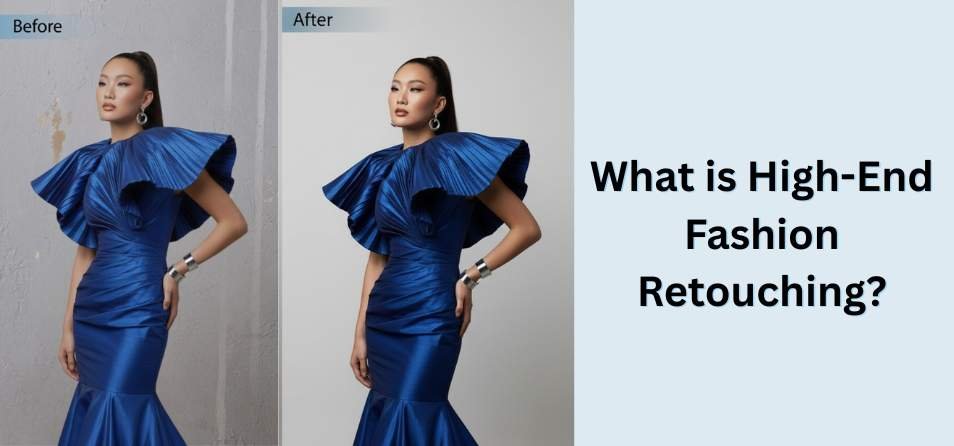
High-end fashion retouching is an advanced digital photo-editing process designed to perfect visual assets while preserving the authentic, natural textures of the subject and garments. Unlike basic editing, which applies automated or global adjustments, high-end retouching is a meticulously manual, pixel-level process.
The primary objective is non-destructive enhancement. Retouchers use industry-standard software, primarily Adobe Photoshop, to remove temporary distractions—such as stray hairs, sensor dust, or skin blemishes. Crucially, they do this without destroying foundational elements like skin pores, fabric weaves, or natural lighting fall-off.
This level of retouching requires a deep understanding of human anatomy, color theory, and lighting dynamics. The final image must look flawless yet entirely realistic, meeting the rigorous standards required for luxury campaigns, high-resolution digital displays, and print publications.
Basic vs. High-End Fashion Photo Retouching
Choosing between basic editing and high-end retouching depends entirely on the image’s final use case. The table below outlines the distinct technical and strategic differences between the two approaches.
| Feature | Basic Fashion Retouching | High-End Fashion Retouching |
| Primary Goal | Fast, general clean-up for high-volume batches. | Creating a flawless, hyper-realistic, and artistic master image. |
| Skin Processing | Global blurring or smoothing (often destroys natural texture). | Frequency separation and micro dodge/burn (preserves exact texture). |
| Time Investment | 5 to 15 minutes per image. | 1 to 5+ hours per image, depending on complexity. |
| Scope of Work | Exposure correction, basic cropping, automated spot removal. | Advanced compositing, precise garment reshaping, precise color grading. |
| Ideal Use Case | Standard e-commerce product listings, social media stories. | Magazine covers, global luxury campaigns, large-format billboards. |
| Cost | Low cost per image, viable for bulk processing. | Advanced compositing, precise garment reshaping, and precise color grading. |
Why Brands Must Invest in High-End Retouching in 2026
With the proliferation of ultra-high-definition technology, consumer expectations for visual media are at an all-time high. Brands rely on high-end retouching for several structural and financial reasons.
- Display Technology: The widespread use of 8K monitors and Retina mobile displays means consumers see every pixel. Poorly masked hair, color banding, or plastic-looking skin instantly signals a lack of professionalism and diminishes brand equity.
- Visual Consistency: High-end retouching standardizes a brand’s visual identity. Whether a campaign is shot in a studio in New York or on location in Los Angeles, precise color grading and tonal matching ensure the entire collection looks cohesive.
- E-commerce ROI: Accurate representation directly impacts revenue. High-end retouching ensures fabric colors are true-to-life and textures are clear. This reduces product return rates caused by the common consumer complaint that “the item looks different in person.”
Top Industries Utilizing High-End Fashion Retouching
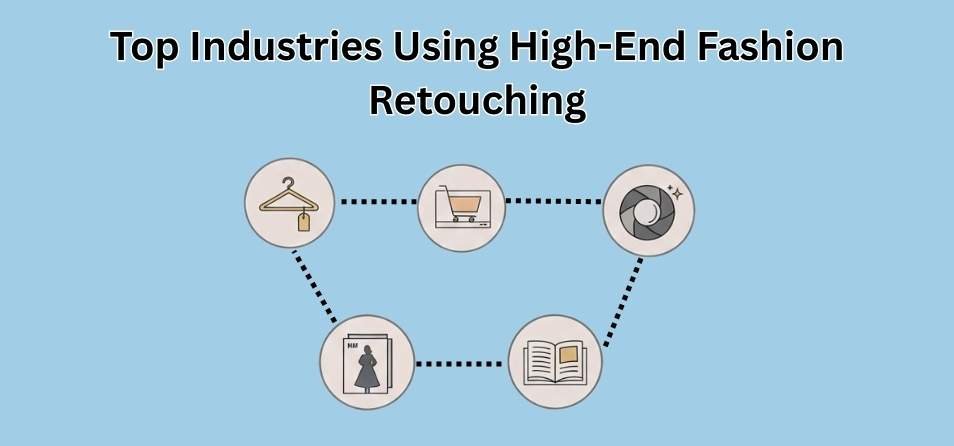
High-end retouching is a critical operational step for several visual-first industries.
- Luxury Fashion Brands: Luxury houses use these services to justify premium price points. Flawless imagery conveys exclusivity, ensuring every sequin and thread looks immaculate.
- Fashion E-Commerce: High-volume retailers use targeted retouching to optimize conversion rates. The focus is on accurate garment fit and color fidelity to drive sales and minimize returns.
- Editorial Publications: Magazines rely on advanced retouching to prepare images for physical print. This involves managing contrast and converting files to precise CMYK color profiles so skin tones do not look muddy on paper.
- Creative and Advertising Agencies: Agencies use high-end techniques for large-format printing. Images destined for 50-foot billboards require pixel-perfect compositing to ensure they do not pixelate or reveal editing artifacts when magnified.
The Core Techniques Behind High-End Fashion Retouching
Achieving a luxury finish requires a combination of advanced, non-destructive editing techniques. Each step addresses a specific element of the image.
1. Frequency Separation for Skin Textures
Frequency separation is a foundational technique that splits an image into two distinct layers: one containing texture (high frequency) and one containing color and tone (low frequency). This allows the retoucher to remove a blemish from the texture layer without altering the underlying skin color, or to smooth a patchy skin tone without blurring the natural pores.
2. Micro and Macro Dodge & Burn
Dodge and burn is the process of manually lightening (dodging) and darkening (burning) specific pixels.
- Micro Dodge & Burn: Used for skin retouching. It smooths transitions between pores and micro-blemishes to create a flawless finish.
- Macro Dodge & Burn: Used for contouring. It enhances the global lighting of the image, shaping cheekbones, highlighting muscle definition, and adding dimension to garments.
3. Advanced Color Correction and Grading
Color correction neutralizes lighting issues and sets accurate white balance. Color grading is the artistic application of color to evoke a specific mood. Retouchers use adjustment layers and ICC profiles to ensure precise color matching across a multi-image campaign, maintaining strict brand guidelines.
4. Reshaping and Liquify Adjustments
Using tools like Photoshop’s Liquify filter, retouchers make subtle, non-destructive geometric adjustments. This is primarily used to correct the drape and fit of clothing, fix awkward posture, or restore symmetry to a garment that shifted during the physical photoshoot.
5. Hair Masking and Flyaway Cleanup
Hair retouching is highly technical. Retouchers use cloning and healing tools to remove distracting flyaway hairs that cross the model’s face or break the silhouette. When compositing an image onto a new background, advanced channel masking is required to extract individual hair strands cleanly.
6. Garment Cleanup and Environment Preparation
Before an image is finalized, the environment and clothing are perfected. This involves removing lint, steaming out wrinkles digitally, and cleaning up the studio background. Retouchers routinely extend seamless backdrops, remove stray light stands, and eliminate scuff marks from the studio floor.
Watch now: The Complete Guide to Fashion and Beauty Photography with High-End Retouching!
How to Choose a High-End Fashion Retouching Partner
Selecting a retouching agency or freelancer requires evaluating their technical capabilities and operational security.
- Portfolio Analysis: Look closely at their “before and after” samples. A skilled partner will retain natural skin pores and fabric textures. If their portfolio looks overly airbrushed or plastic, they are utilizing basic, destructive techniques.
- Technical Compliance: Ensure the partner understands industry standards, such as working with RAW files, utilizing non-destructive workflow layers, and delivering in specific color spaces (sRGB for web, CMYK for print).
- Data Security: High-end campaigns often involve unreleased products. Your retouching partner must offer secure, encrypted server transfers and be willing to sign Non-Disclosure Agreements (NDAs) to protect your intellectual property.
Conclusion
High-end fashion retouching is an essential asset for any brand operating in the modern, ultra-high-definition digital landscape.
By relying on manual, pixel-level techniques like frequency separation and precise color grading, professional retouching transforms raw photography into persuasive, high-converting visual assets.
For luxury brands, editorial publishers, and e-commerce retailers, investing in premium retouching is a direct investment in brand trust and visual authority.
FAQs
Is model photo retouching the same as high-end fashion retouching?
No. Model photo retouching focuses specifically on the subject—enhancing skin, hair, and body contouring. High-end fashion retouching is a comprehensive process that includes the model but places equal emphasis on perfecting the garment drape, color accuracy, and environmental compositing.
What is the purpose of frequency separation in retouching?
Frequency separation allows an editor to separate the texture of an image from its underlying colors and tones. This enables them to remove blemishes or smooth skin tones independently, resulting in flawless skin that retains its realistic, natural pores.
How do retouchers fix messy hair in fashion photos?
Retouchers use Adobe Photoshop tools, specifically the Clone Stamp and Healing Brush, to manually paint out distracting flyaway hairs. For complex background removals, they use advanced channel masking to separate intricate hair details from the environment.
Why is high-end retouching important for e-commerce?
E-commerce relies heavily on visual accuracy. High-end retouching ensures that the colors of garments online match the physical product exactly, and that fabric textures are clearly visible. This builds consumer trust and significantly reduces product return rates.
Should I use automated AI tools or a professional retoucher for luxury campaigns?
For luxury campaigns, professional human retouchers are currently required. While automated tools are fast, they apply global adjustments that often destroy fine textures and miss the nuanced, brand-specific art direction required for high-end fashion standards.