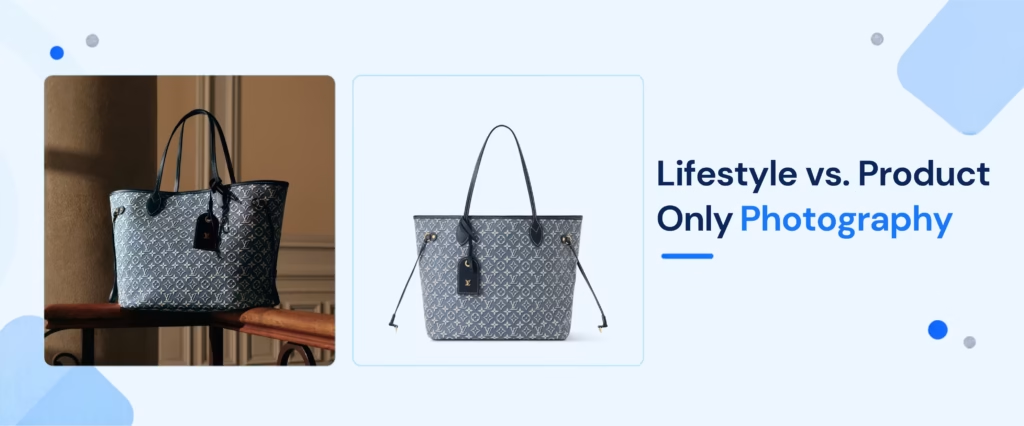



A product can look great in a photo and still leave shoppers cold. The image might be clean, well edited, and technically perfect, but if it feels flat or disconnected from real life, making it easy to scroll past. That is where lifestyle product photography can make a real difference for ecommerce brands.
It gives products more context, personality, and a clearer place in the customer’s everyday routine. Moreover, it can make product pages feel more engaging and give ads and social content a more natural look. Keep reading for practical ideas, real examples, and simple tips you can use for your next shoot.
What Is Lifestyle Product Photography?

Lifestyle product photography shows a product in a real or styled environment. Common scenarios include the product being used, worn, held, or placed where customers would naturally expect to see it.
For example, a coffee maker might appear on a kitchen counter during breakfast. A handbag could be photographed on someone walking through the city. A skincare product might sit beside a mirror while someone applies it.
Even though setting matters, the product should still lead the frame. Props, models, colors, and backgrounds should support the story, not compete with it. That makes real-life product photography useful for ecommerce.
Lifestyle Product Photography Vs. Product-Only Photography

Both styles can work well for ecommerce, but they serve different purposes. One focuses on showing the product clearly, while the other helps shoppers see how it fits into real life. Here is a quick comparison to make the difference easier to understand.
| Product-only photography | Lifestyle product photography |
| Uses a plain or controlled background | Uses a real or styled setting |
| Makes details easy to inspect | Shows use, scale, mood, and context |
| Works well for catalogs and main images | Works well for galleries and campaigns |
| Keeps attention on the product | May include models, props, or environments |
| Helps shoppers compare details | Helps shoppers picture real use |
A strong image set often uses both. Clean shots show what is being sold, while lifestyle product photos add context.
For marketplace sellers, channel rules matter too. Amazon currently requires a pure white background for most main product images, with limited exceptions. On the other hand, Google Merchant Center supports lifestyle images for real-world product use.
Need Product Photo Editing Services?
How Lifestyle Product Photography Helps Ecommerce Brands
Ecommerce lifestyle photography can make a product easier to understand without adding more copy. One well-planned image can show size, use, styling, environment, or customer type in seconds. It also gives brands flexible assets for product pages, ads, email, social posts, and campaigns.
However, accuracy still matters. Labels, colors, materials, proportions, and included accessories should stay true to what customers will receive.
After the shoot, product photo retouching services can remove distractions, clean surfaces, refine color, and improve consistency without changing the product itself.
When Should You Use Lifestyle Product Photography?
Not every product needs a complicated lifestyle shoot.
Lifestyle product photography is a good option when the customer’s decision depends on seeing the product in use, having a feeling of scale, visualising the object in a particular location or identifying with the person using the product.
It is particularly useful for fashion, beauty, jewelry, furniture, fitness equipment, food, travel products, technology, and lifestyle brands.
For simple commodities where specifications matter more than experience, product-only photography may be enough. But even then, one or two contextual images can help explain practical use.
A useful rule is simple: if seeing the product being used answers a question that a plain product image cannot, consider adding a lifestyle shot.
Lifestyle Product Photography Ideas For Every Product Type
The best lifestyle product photography ideas usually start with five things that include product, customer, setting, action, and visual purpose. Build the scene around those points instead of choosing props first. Here are some useful lifestyle product photography ideas.
Beauty & Skincare Products

You can show the product inside a believable routine. A serum can appear beside a bathroom mirror while someone applies it, or moisturizer can sit on a vanity after use. Keep the scene clean and ensure packaging, label color, and product texture stay accurate.
Fashion & Clothing Products

Product photography with models helps shoppers understand fit, movement, length, or styling. Photograph the model walking, sitting naturally, or layering the garment with everyday pieces.
Mix wider shots with fabric details. However photo retouching can then clean small distractions while preserving realistic skin and garment color.
Jewelry & Accessories

Jewelry usually benefits from scale. Show a necklace on the neckline, earrings being worn, or a bracelet beside a sleeve. Keep props simple so small details do not disappear.
Close, in-use shots are strong lifestyle product photography examples because they show both appearance and proportion.
Food & Beverage Products

Build the scene around the moment of consumption. Coffee might sit beside breakfast, a sparkling drink could be poured over ice, or snacks could appear in a work bag. It’s better to use ingredients, glassware, or serving pieces only when they clarify the product story.
Home Decor & Furniture

For home decor photography, you should place the item where it naturally belongs. A lamp beside a bed, a chair near a reading table, or a rug under a dining setup helps shoppers understand scale and placement. Include enough of the room for context without letting the environment overpower the product.
Kitchen & Cookware Products

Showing cookware doing its job is the best idea here. Photograph a pan on the stove, a knife during food prep, or storage containers inside a working kitchen.
These product photography ideas are useful when the action explains function. Hands, ingredients, or steam can help, but the product should stay easy to identify.
Electronics & Tech Products

Put the device in a realistic use case. Headphones can appear during a commute, a keyboard in a home office, or a portable speaker at a gathering. Avoid clutter and too many glowing screens. Customers should understand the setting without losing sight of the product.
Fitness & Sports Products

For fitness and sports products, the image should feel active and natural. Show resistance bands, shoes, mats, bottles, or other gear being used in a real workout setting. Keep the pose believable and choose an action your customer can easily relate to.
Outdoor & Travel Products

Use an environment that highlights portability, convenience, or durability. A backpack on a trail, travel organizer inside luggage, or insulated bottle beside a campsite can provide useful context. Make sure clothing, weather, terrain, and props fit the product and its likely use.
Pet Products

For pet products, the interaction must feel natural. For example, show a feeder at mealtime, a leash during a walk, or a pet bed in a comfortable corner. Avoid forcing an animal into an awkward pose. Scale matters, so customers should be able to judge whether the product suits the pet shown.
Health & Wellness Products

Keep wellness imagery simple and credible. A supplement container can appear beside breakfast, a recovery product after exercise, or a sleep accessory in a bedroom. Avoid visual cues that suggest medical results unless the product is legally allowed to make those claims.
Luxury & Premium Products

Luxury scenes usually work better with restraint. Use quality surfaces, thoughtful lighting, and fewer props. A watch, fragrance bottle, leather bag, or premium accessory should remain the clear focus. The scene can feel polished without becoming so elaborate that the product has to compete for attention.
Handmade & Artisan Products

It’s better to show texture, craft, and the human side of the item. Ceramics can appear on a dining table, handmade candles in a lived-in room, or floral pieces during arrangement. Slightly imperfect real settings can often feel more convincing than a set that looks overly polished.
Must Watch: Lifestyle Photography & Videography for Product
Frequently Asked Questions
Do you still have a few questions before planning your shoot? These answers cover the small details that can make lifestyle product photos easier to plan and use.
How Should You Plan a Lifestyle Product Photography Shoot?
You should start with the product, target customer, and where the images will be used. Then build a simple shot list around realistic moments, locations, and actions.
What Props Work Best for Lifestyle Product Photography?
Choose props that support the product instead of competing with it. A few familiar objects usually work better than a busy setup filled with decorative pieces.
How Do You Keep Lifestyle Product Photos Consistent Across a Store?
Use similar lighting, color tones, editing, and framing across the collection. The scenes can change, but the overall look should still feel like one brand.
What Is The Difference Between Lifestyle And Product Photography?
Object photography is about showing the object accurately and lifestyle photography is about putting the thing into a scenario. The first describes the thing and the second helps explain how to use it and the context.
Can Lifestyle Product Photography Work for Small Products?
Yes, small products can work very well in lifestyle scenes when you use hands, nearby objects, or close framing to make their scale easier to understand.
How Should Lifestyle Product Photos Be Edited for Ecommerce?
Editing should clean distractions, balance color, and keep the product looking true to life. Avoid heavy changes that make the item look different from what customers receive.
Final Takeaway
Good lifestyle product photography should feel natural, not over-planned. The setting, model, props, and styling should all help the product make more sense without pulling attention away from it.
For ecommerce brands, the strongest galleries usually mix clean product shots with lifestyle images that add context and personality. Keep the product true to life, choose scenes your customers can relate to, and make sure every image adds something useful to the buying experience.